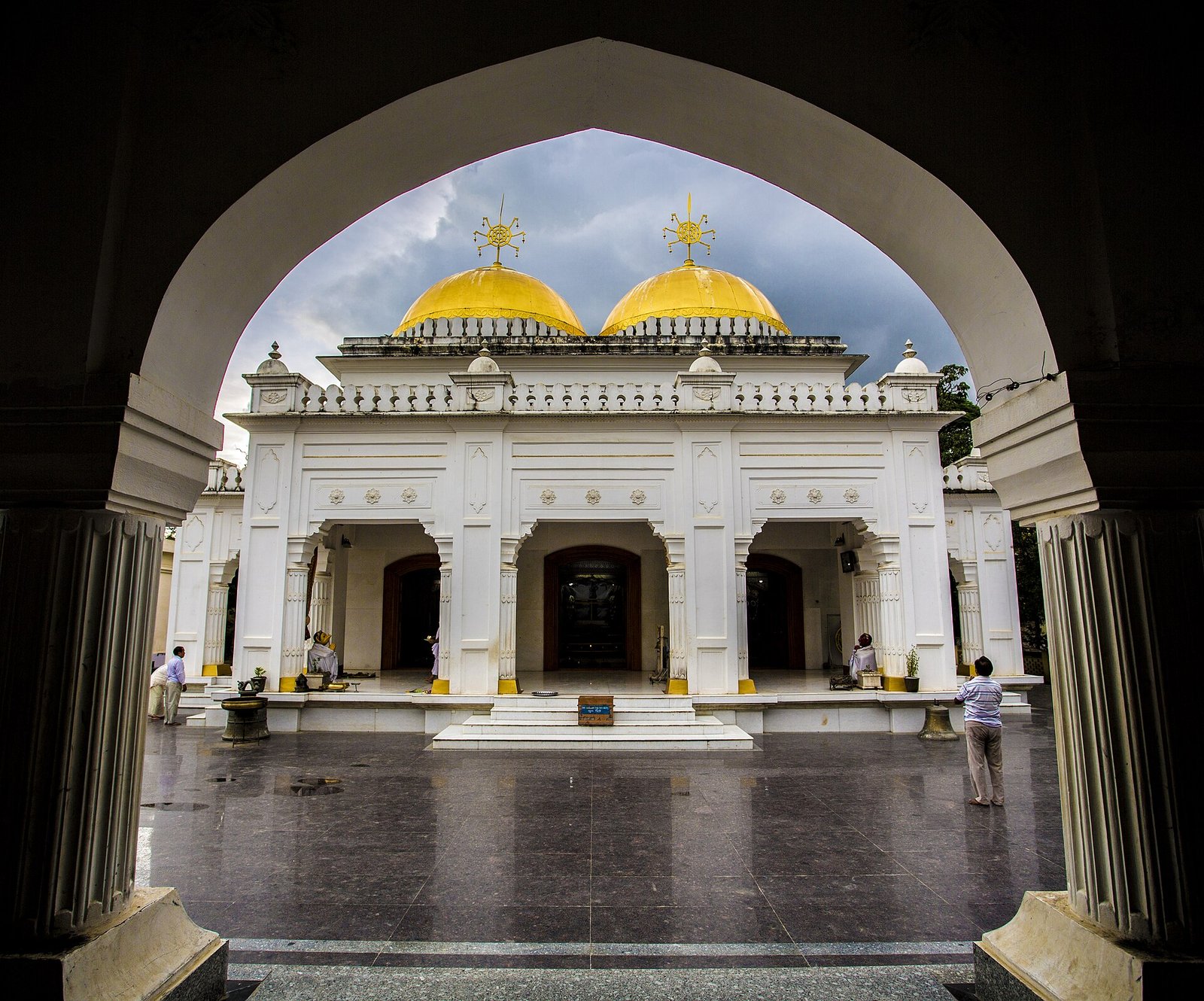
Every year in the Manipuri month of Engen, which falls across late June and early July, the streets around Imphal’s Shree Govindajee Temple fill with barefoot devotees in white, straining against thick ropes to haul a towering wooden chariot. The festival is Kang Chingba — literally “pulling the Kang” — Manipur’s own version of the Rath Yatra, and one of the oldest continuously observed public festivals in the Northeast.
The ten-day festival centres on Lord Jagannath, his brother Balabhadra, and sister Subhadra, whose idols are placed on a decorated chariot and pulled along a set route between the Govindajee Temple and Sanathong. The belief that drives the crowds is simple: those who get to hold the ropes, even briefly, have their sorrows carried away with the chariot.
Jagannath worship reached Manipur long before the festival took its present public form. It began during the reign of Meidingu Charairongba, between 1697 and 1709, after a Brahmin priest from Puri settled in Imphal. The deity entered royal worship in 1780 under Maharaja Bhagyachandra, with the founding of the Shree Bijoy Govindajee Temple, but Kang Chingba became a festival for the wider public only in 1832, when Maharaja Gambhir Singh installed the idols now used every year at the Shree Shree Govindajee Temple — still the festival’s central venue. The celebration later spread into neighbourhoods across the Imphal Valley under Maharaja Churachand.
What makes Kang Chingba distinct from Puri’s original Rath Yatra is how thoroughly it has been absorbed into Meitei tradition. The chariot itself reflects local architectural style. Evenings through the ten days are given over to Jayadev devotional singing and Choitep Chongba performances at neighbourhood mandaps. And on the closing days, the festival folds in rituals that exist nowhere else in the Jagannath tradition: Ningol Paali, observed by unmarried women, and the sharing of Khechri, a simple rice-and-lentil dish served on lotus leaves, tied to a story of Subhadra cooking in haste while her brothers were away. ISKCON Imphal also holds its own, Puri-style procession alongside the temple’s traditional one, drawing a second large crowd of devotees each year.
Nearly two centuries on from Gambhir Singh’s installation of the idols, Kang Chingba remains one of the clearest windows into how Vaishnavite worship took root in Manipur without displacing what was already distinctly Meitei about the way it’s practised.
Compiled from:
- NorthEast India Connect — “Kang Chingba: Manipur’s Vibrant Rath Yatra Chariot Festival”
- MyGov Blogs — “Festivals of Manipur: Kang”
Dates for Kang Chingba follow the Manipuri lunar calendar and shift each year; historical details are drawn from the sources above and general accounts of Manipur’s Vaishnavite history.
Image: Shree Govindajee Temple, Imphal East district. Credit: Bimal Thongam / Wikimedia Commons (CC BY-SA 4.0).